Emmanuel College Oriental Plane Tree
This means that despite its enormous size, at around 223 years old the tree is still a way from being considered ‘old’ in tree terms. The oldest plane tree in the UK is around 130 years older than this one, having been planted in 1675, and the species is recorded of reaching ages of over 500-1000 in its natural range. This means that we can still expect growth and strong vitality, which is evidenced by the growth rate of the shoots, the leaf colour and the tree’s ability to deal with wounding such as pruning.
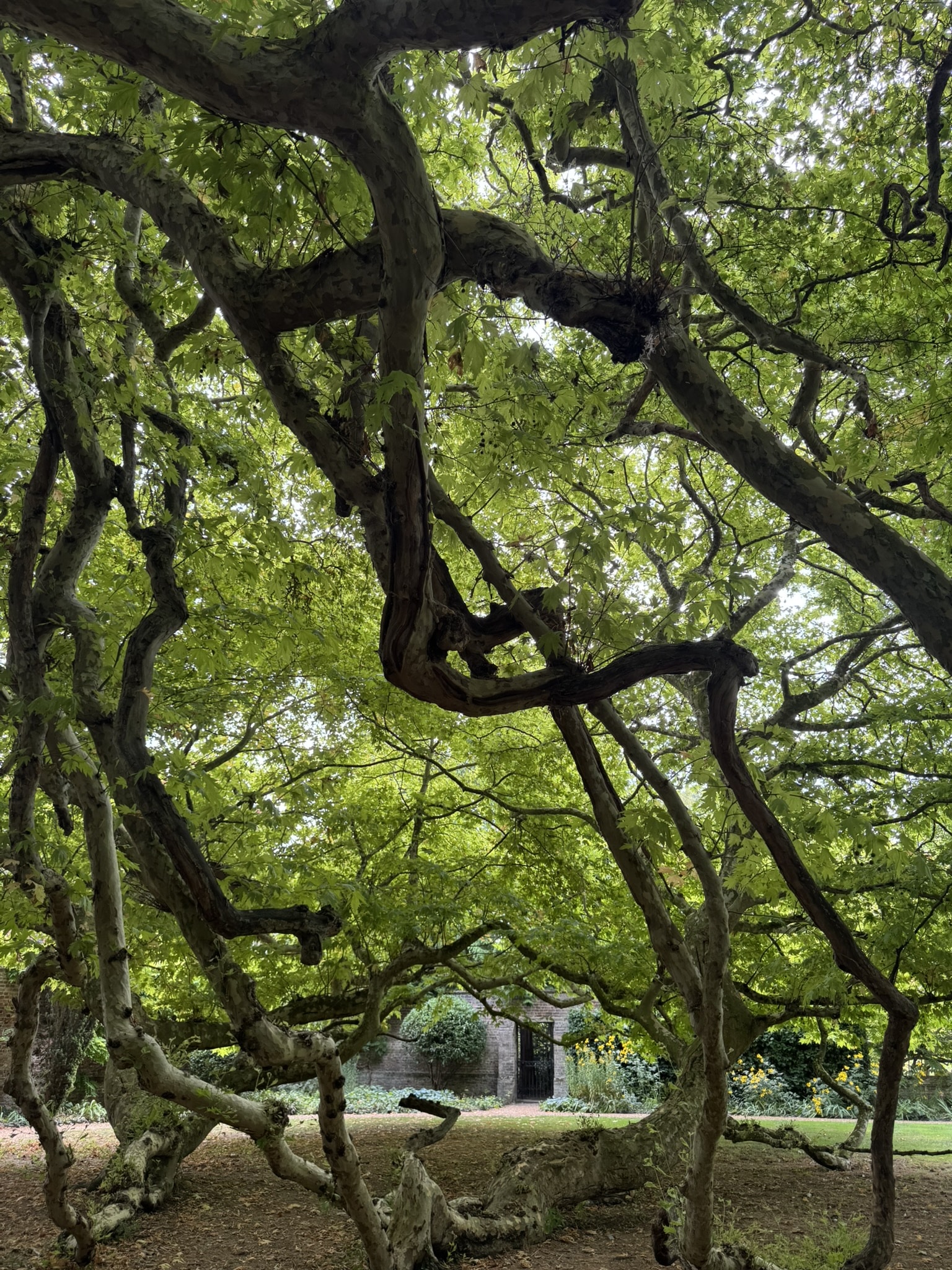
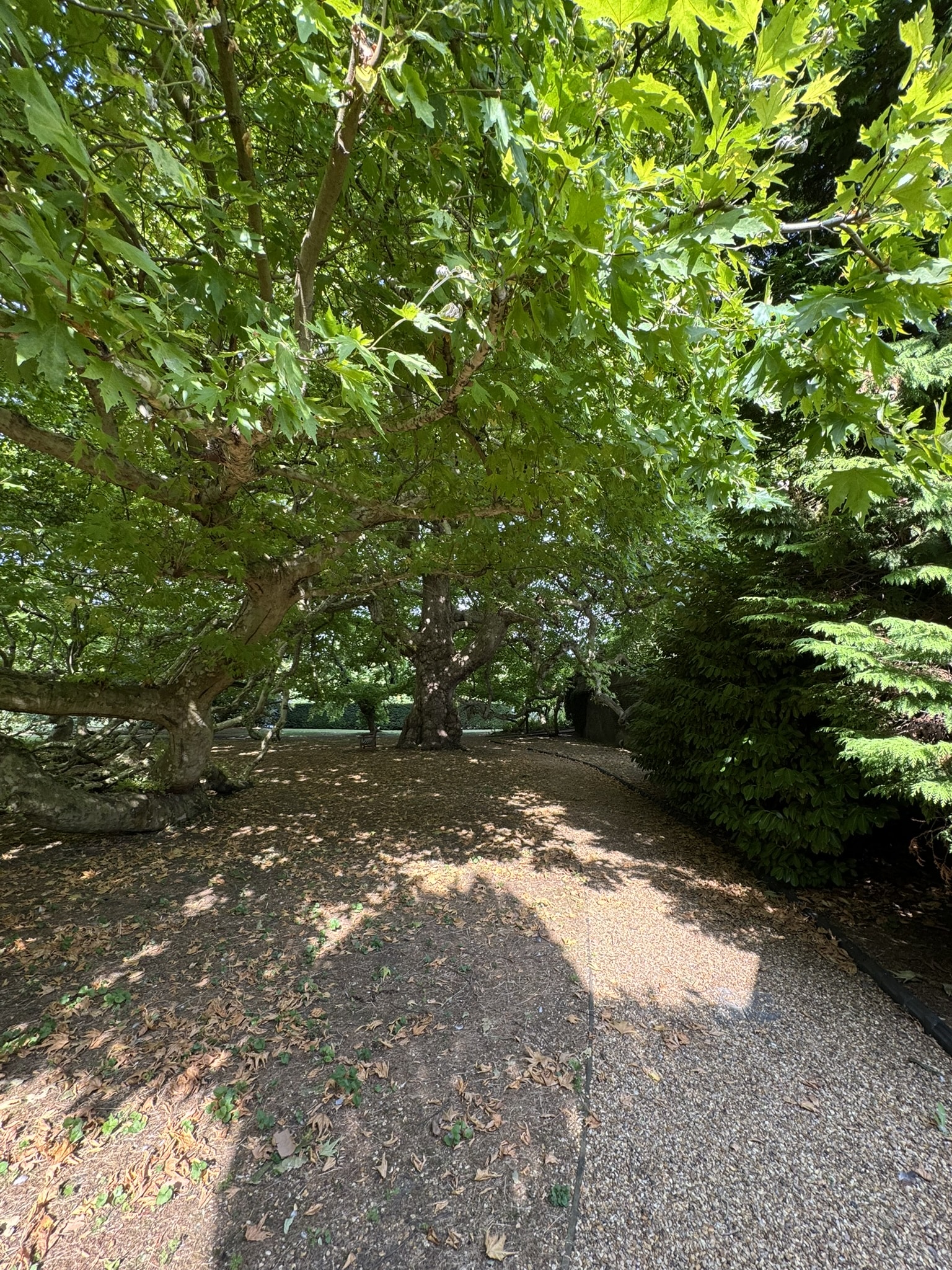
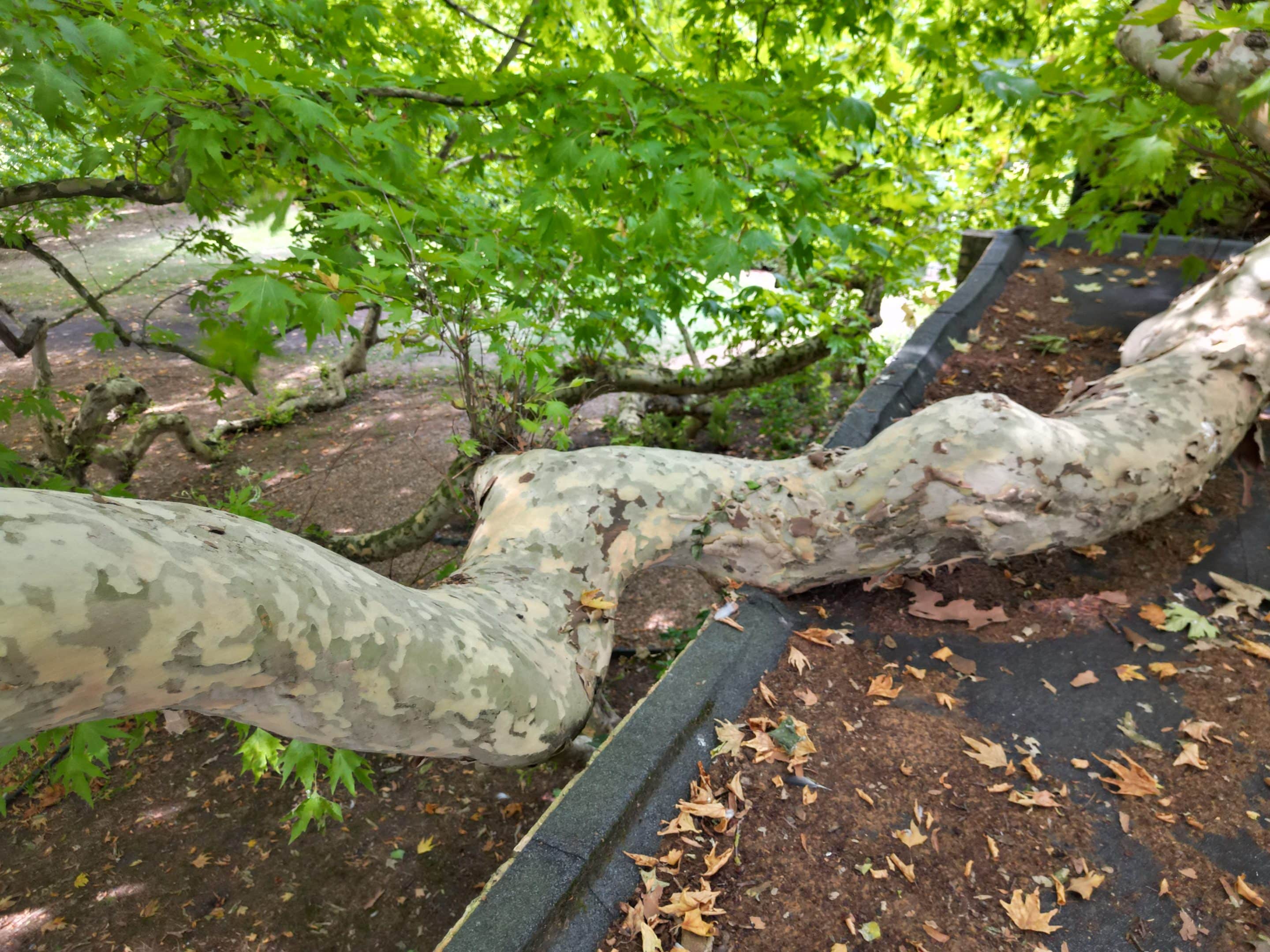
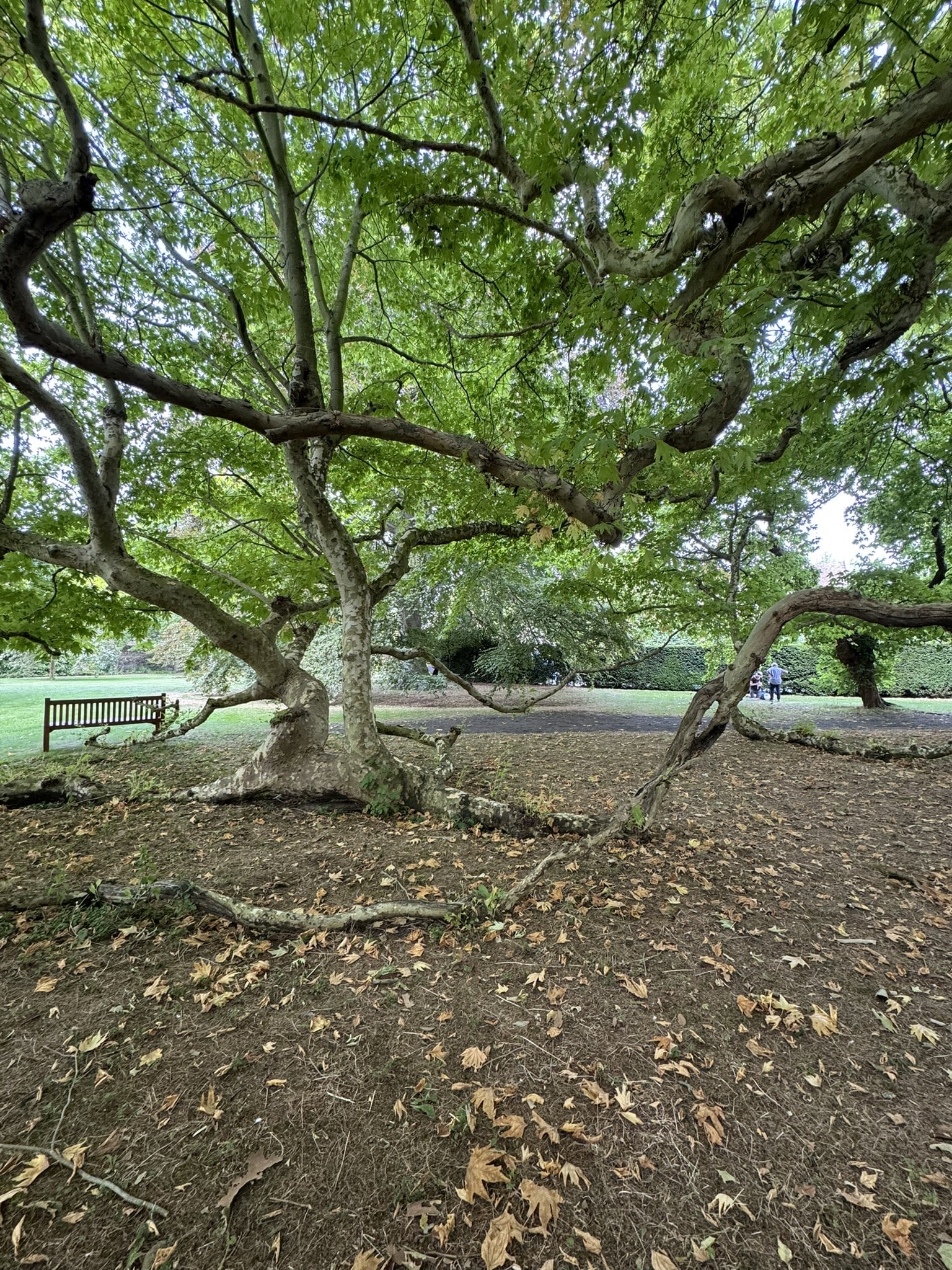
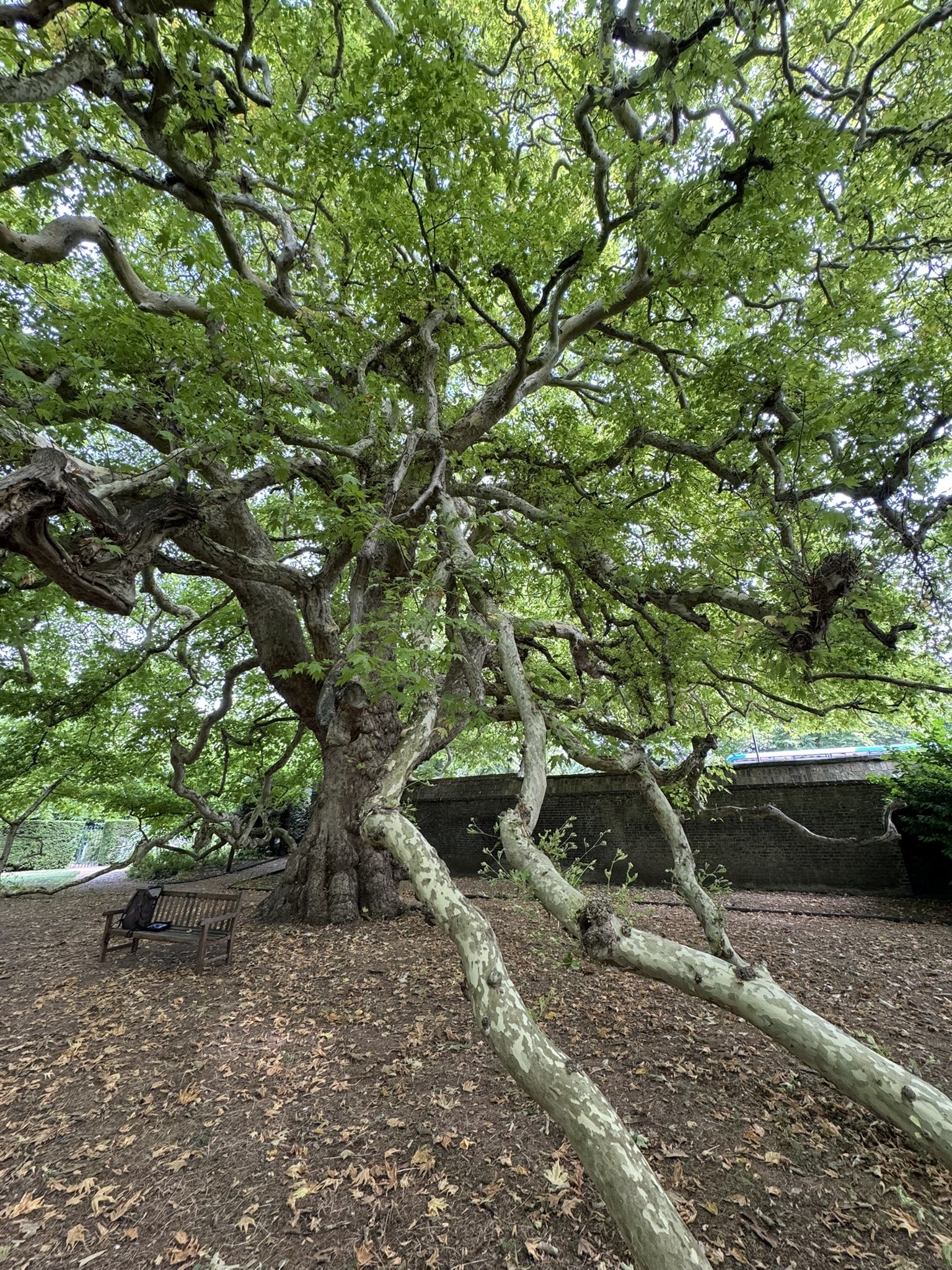
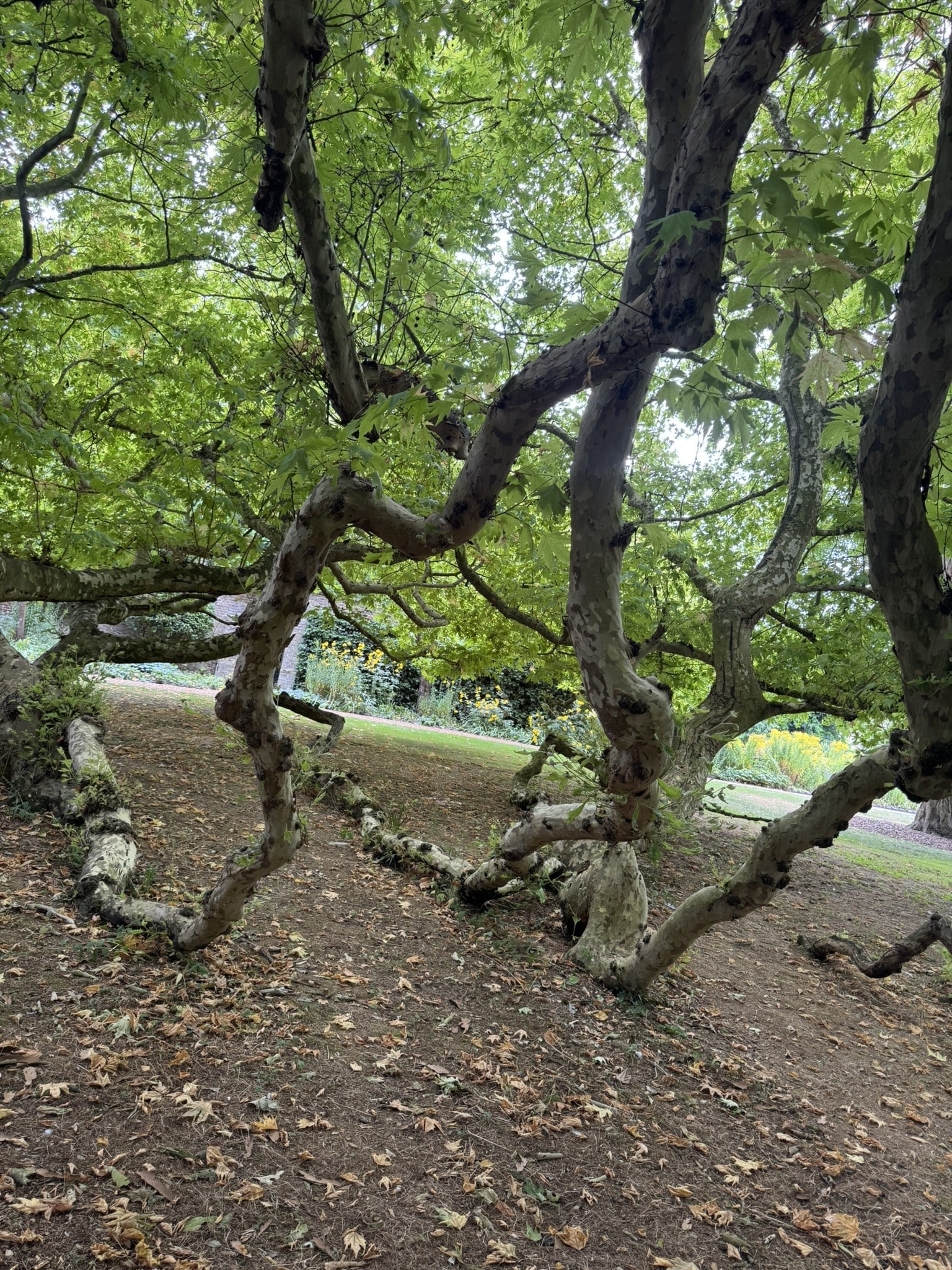
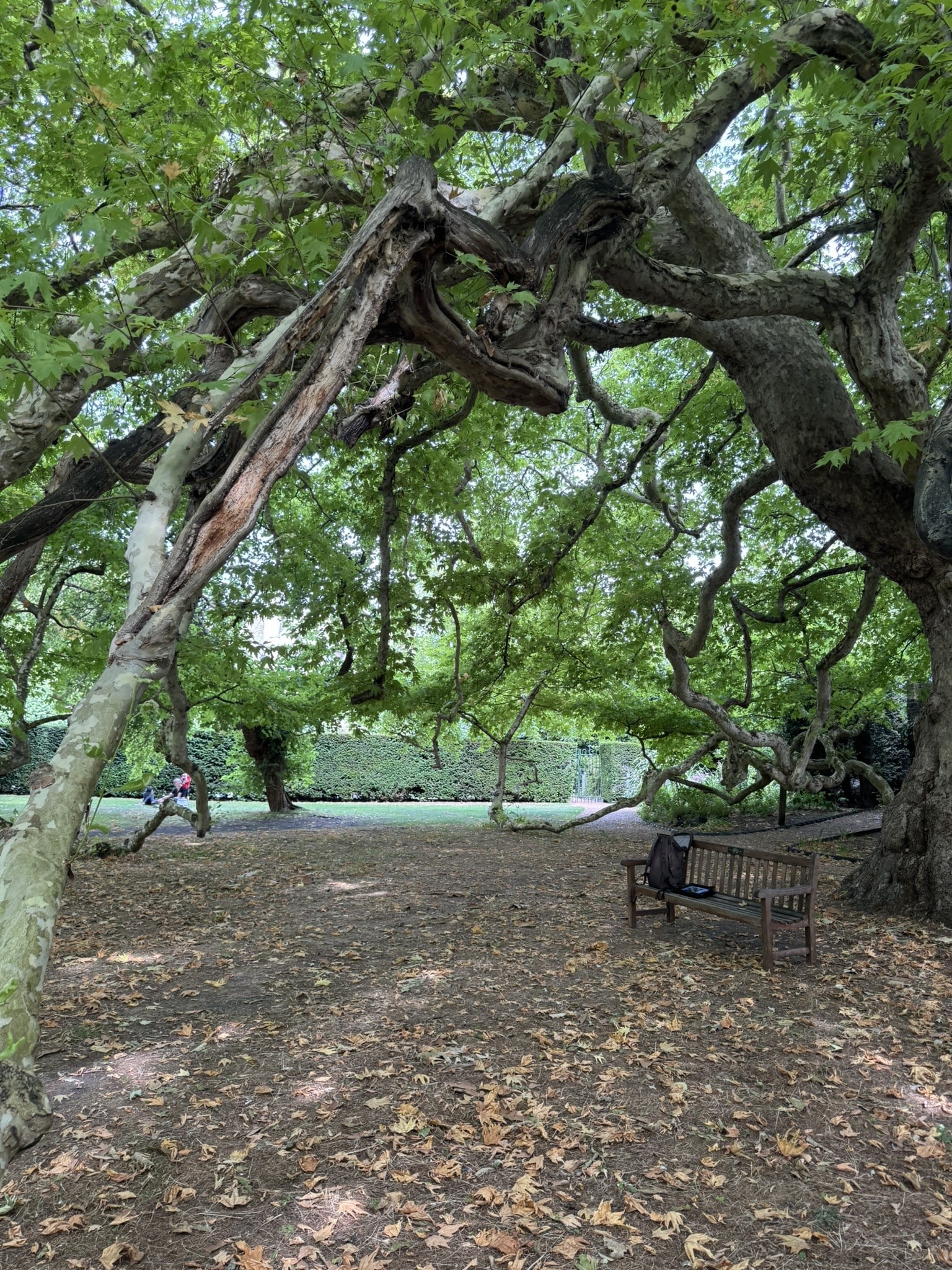
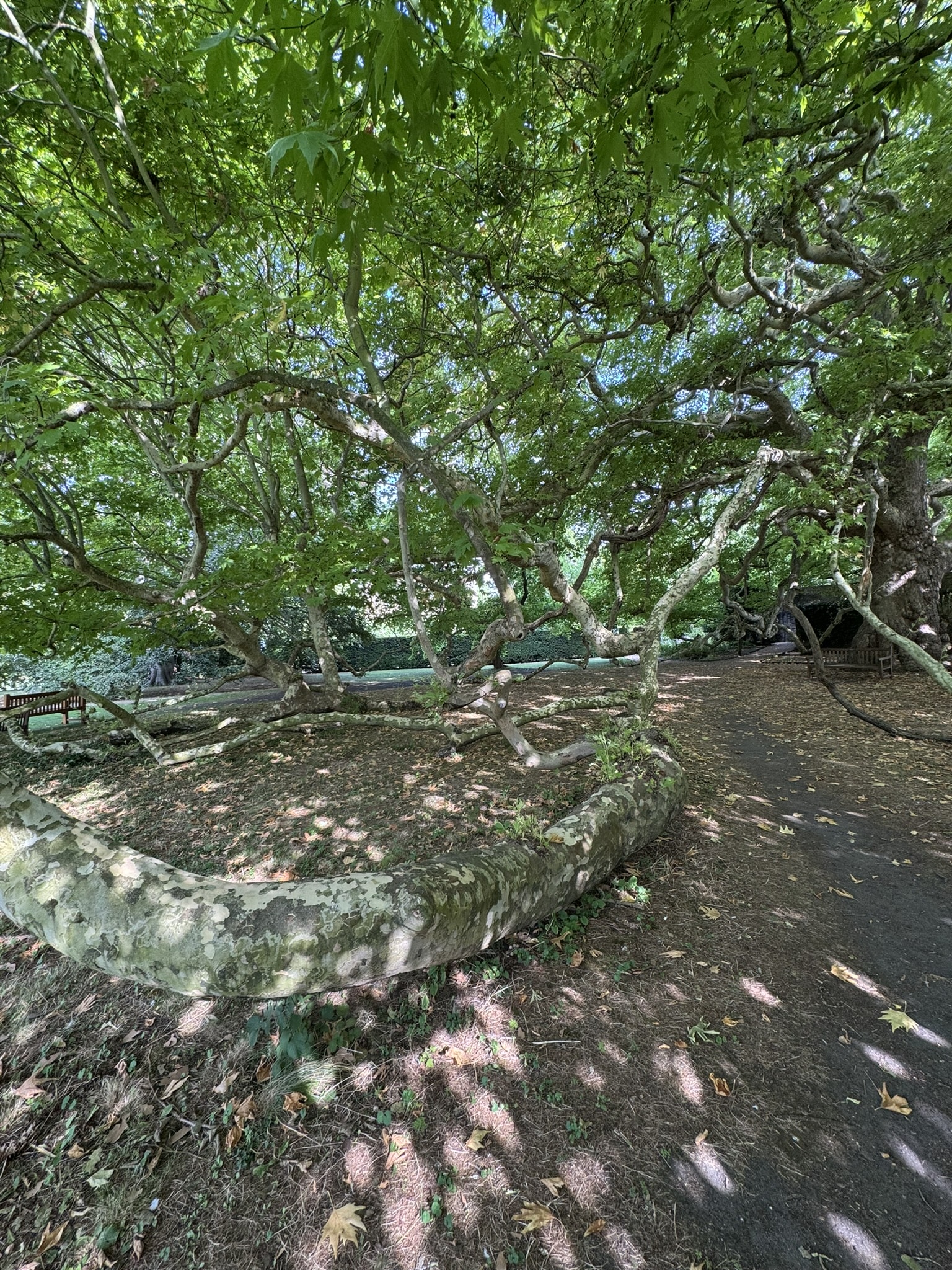
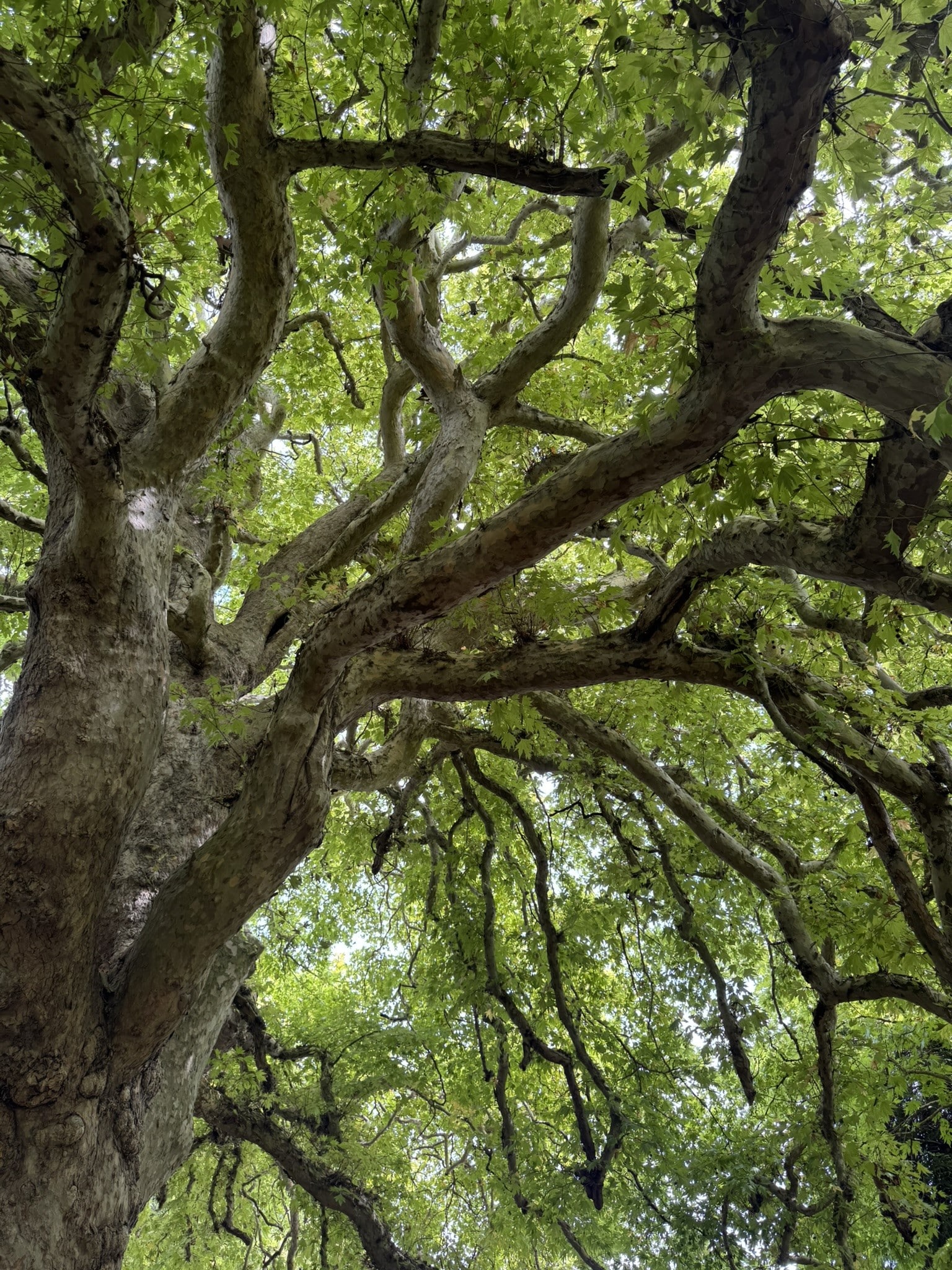
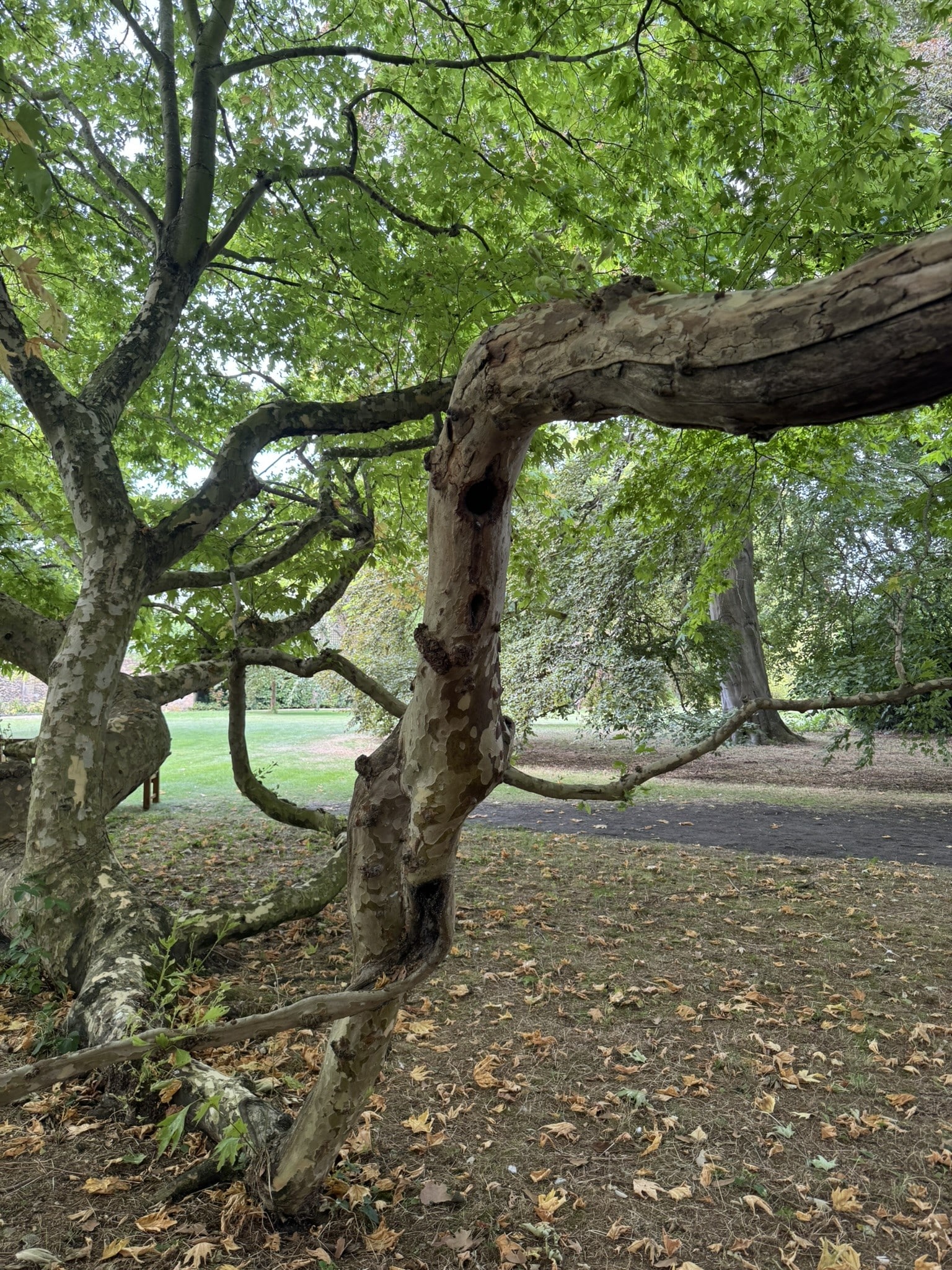
The habit of the tree is rather unusual for the species, with large limbs growing down towards the ground and along the floor where they have then rooted or ‘layered’ and then grown upwards again, becoming secondary trunks in their own right. This is another demonstrator that the tree is healthy, and it Is this form that has allowed the tree to reach a crown spread of a whopping 44m, covering an area of approximately 1520m2 (over 1/3 of an acre).
The tree is regularly inspected to ensure the health and vitality of the tree remains high, and that there is no unacceptable risk of harm to those using the fellow’s garden, or passing by the bus stops on Parkers Street, which the tree overhangs.
The tree has been featured on the cover of the book ‘Meetings with remarkable trees’ by Thomas Pakenham, and is visible over the college wall, from the upper decks of the buses arriving at the town centre.
In the summer of 2025, TMA were asked to carry out an enhanced visual inspection of the tree, to assess the risk of harm to those using the gardens and the road/footpath outside of the college. We used LiDAR to accurately measure the stem geometry and submitted this along with photographic data for advanced tree biomechanic analysis with Adbian®.
TMA enlisted the help of Arb Innovators ltd in carrying out aerial inspections of features in the tree that we couldn’t fully assess from ground level – this mitigated the need for a separate climbed inspection reducing the invasiveness of the inspection and the associated risk to staff/contractors. Data from the drone survey and handheld terrestrial camera was additionally processed into the selection of 3D visualisations, viewable on this page.